The decision in one line
Define the value of a sale first. Only then can you decide what a click, an enquiry and a customer are worth—and turn media spend into a manageable growth investment.
Hong Kong is a compact, media-dense market where people move quickly between platforms. The useful question is not simply “How much do Facebook ads cost?” It is whether every dollar has a defined commercial job, and whether the team can identify which part of the system needs improvement.
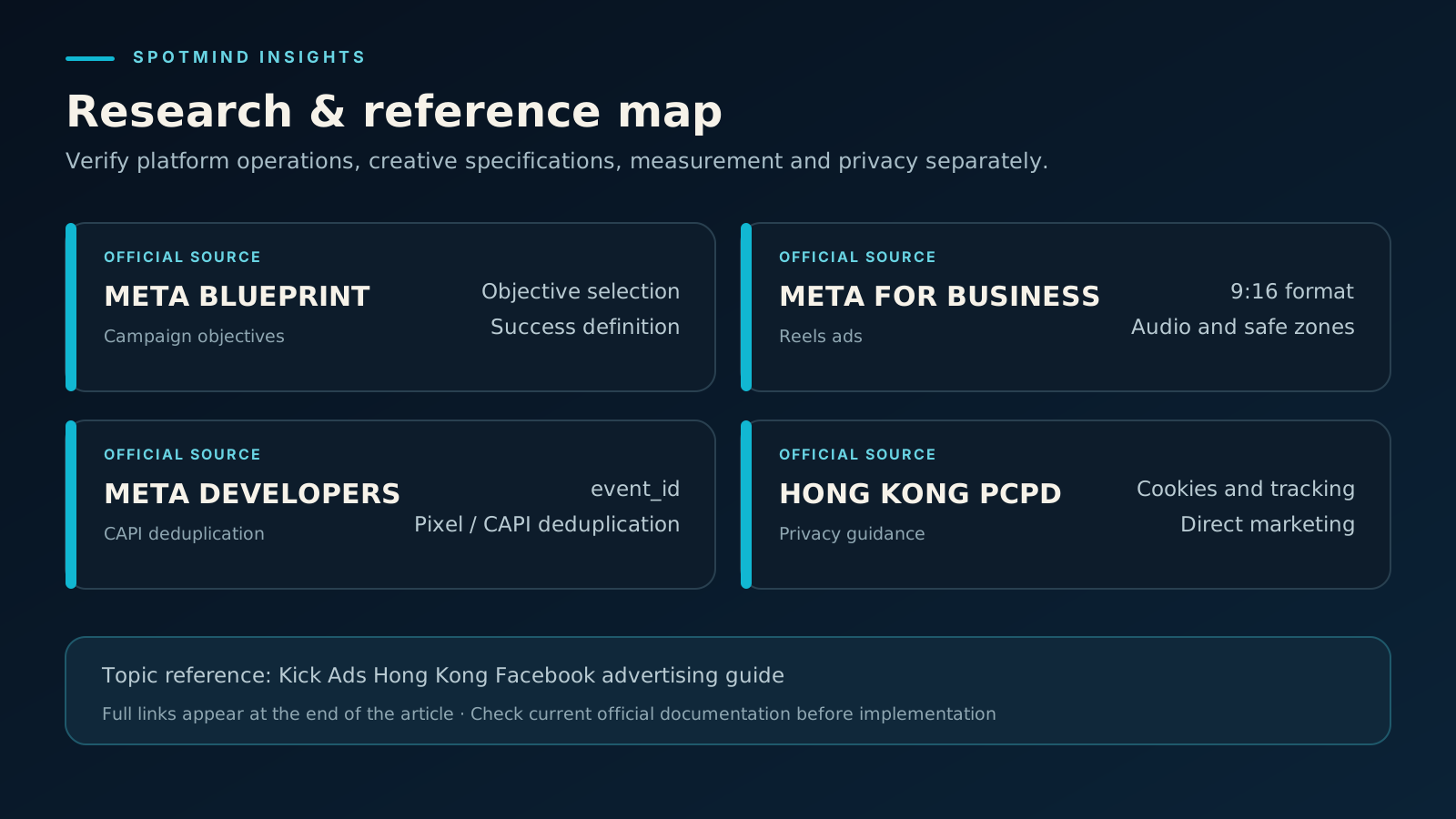
This article uses the Kick Ads Hong Kong guide as a reference, then rebuilds the topic through SPOTMIND's strategy, content and data lens. Platform features, auctions and tracking settings change over time; always check current Meta documentation and your own first-party data before making an operational decision.
1. Start with the commercial job
An objective is not merely a dropdown in Ads Manager. It tells the system which type of action to seek. Awareness, video views, traffic, leads, app promotion and sales require different signals and success measures. Meta Blueprint likewise recommends matching the business goal to the campaign objective before measuring results.
Before launching, complete one sentence: We want which people, in what situation, to take what measurable action, creating what commercial value?
- A new brand may prioritise quality reach, video attention and branded search growth.
- A content-rich brand may need qualified visits to a landing page with a clear next step.
- A considered service may optimise for qualified forms or WhatsApp conversations, then measure bookings and sales.
- Ecommerce should evaluate verified purchases, margin and new-customer mix—not clicks alone.
When one campaign is expected to deliver awareness, enquiries and immediate sales at once, the algorithm, creative and team receive conflicting instructions.
2. Build the budget backwards from allowable cost
CPM, CPC and CPL vary by season, competition, audience, placement, creative quality and conversion signal. A market benchmark can be context, but it cannot tell you whether your business will make money.
Use unit economics instead:
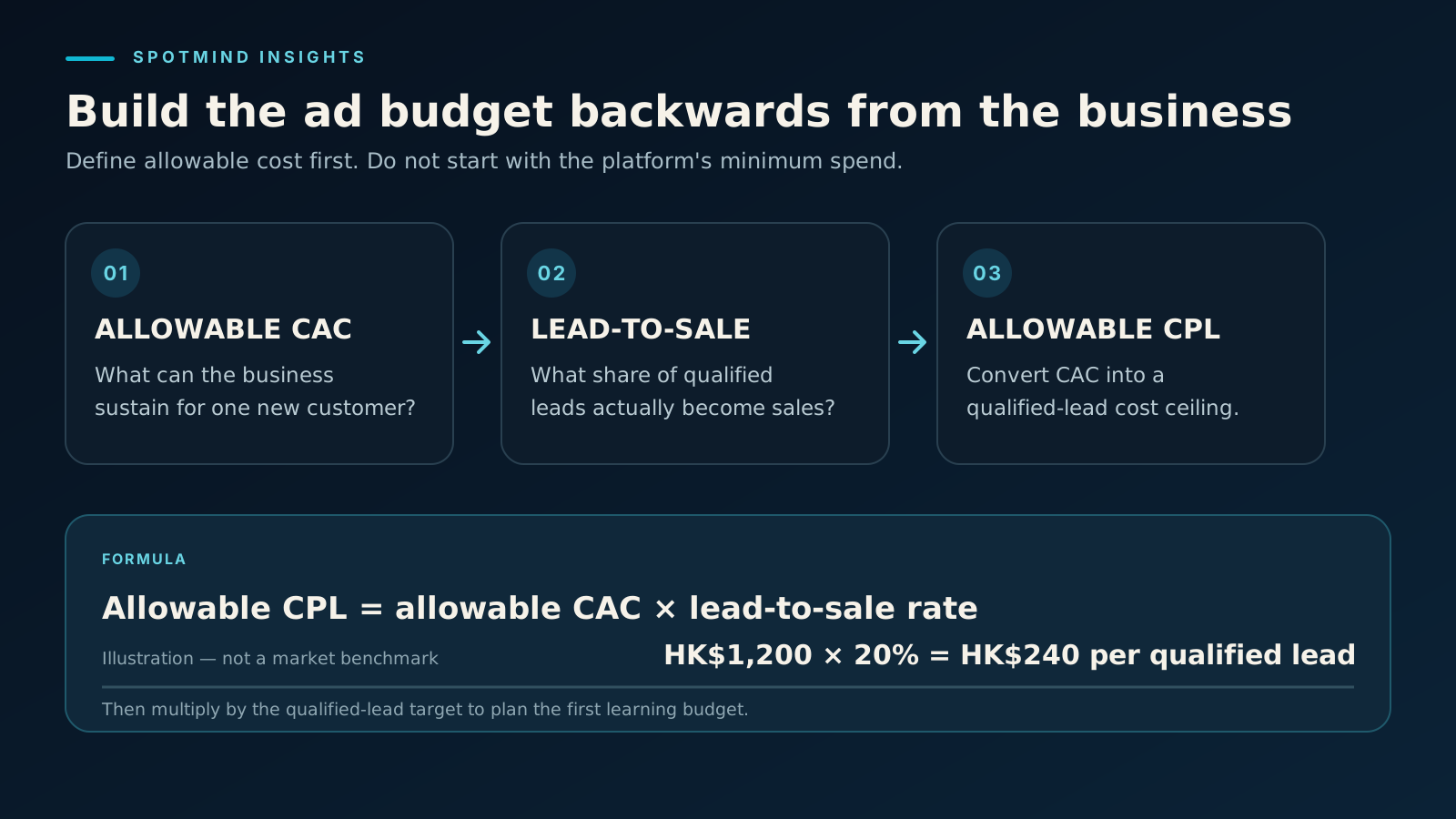
- Establish the maximum customer acquisition cost the business can sustain.
- Convert that into an allowable CPL using the real lead-to-sale rate.
- Multiply it by the number of qualified leads needed for a meaningful first test.
Allowable CPL = allowable CAC × lead-to-sale conversion rate
For example, if a new customer can support HK$1,200 in acquisition cost and two out of every ten qualified leads become customers, the allowable CPL is approximately HK$240. A first target of 30 qualified leads would suggest a starting media test of about HK$7,200. This is an illustrative formula only; actual planning must include gross margin, refunds, sales labour, repeat purchase and cash flow.
Separate learning budget from scaling budget. The first validates audience, message and conversion path. The second is released only when the signal is credible and operations can absorb more demand.
3. Let Campaign, Ad Set and Ad answer different questions
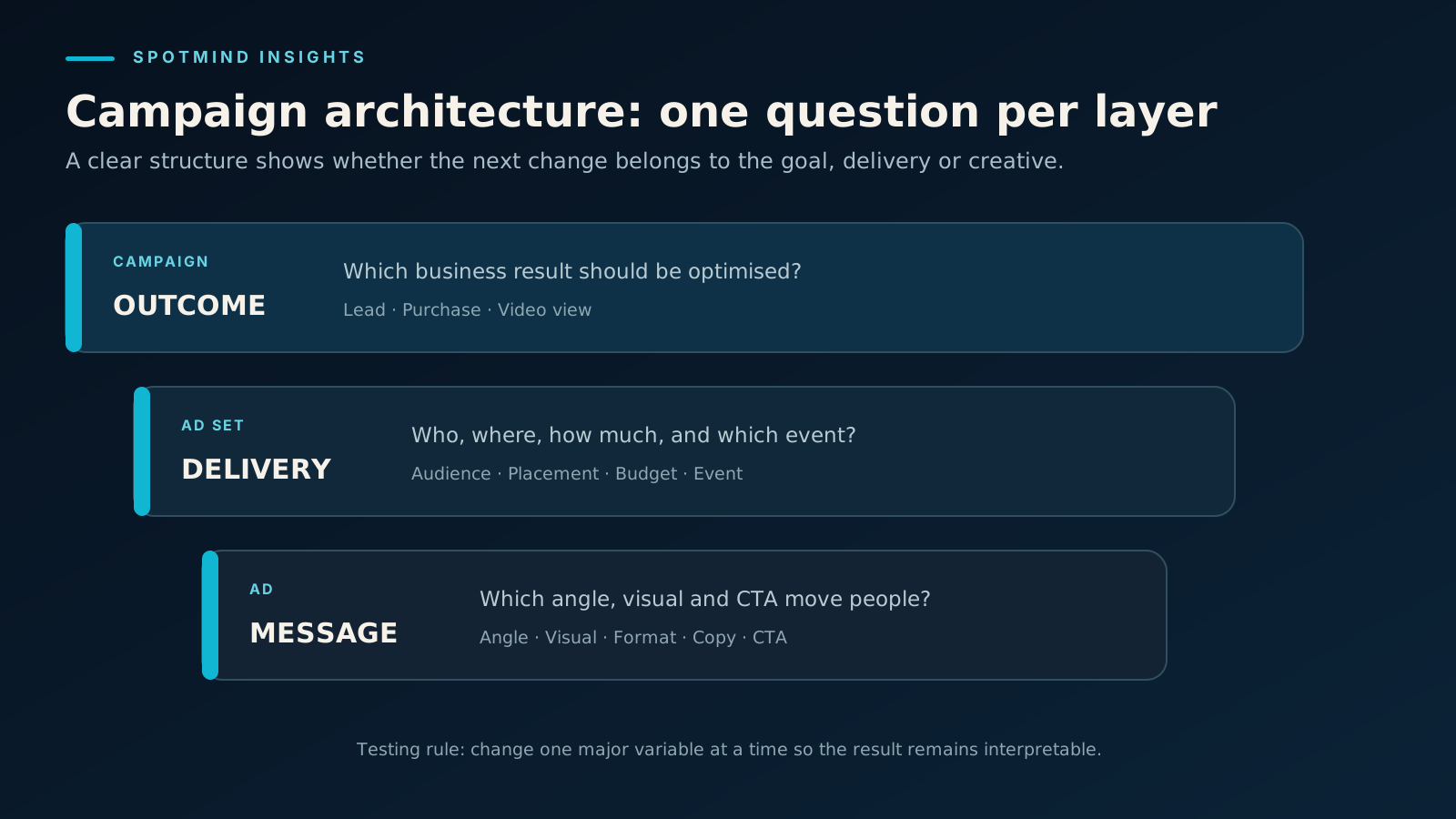
- Campaign: What outcome should the system optimise?
- Ad Set: Who should see it, where, with what budget and conversion event?
- Ad: Which angle, visual, format, copy and call to action move people forward?
Avoid fragmenting small audiences too early. Each Ad Set needs enough exposure and conversion signal to reveal a real difference. Start with a few mutually exclusive, commercially meaningful hypotheses, then segment on evidence.
4. Choose the right Hong Kong conversion path
Direct ecommerce: ad → product page → checkout. Best when the decision is quick and price, delivery and returns are clear.
Lead nurturing: ad → guide or registration page → email or remarketing → consultation. Useful when buyers need education or comparison.
WhatsApp conversation: ad → pre-filled message → qualification → quote or appointment. Common for services, appointments and high-touch retail in Hong Kong.
Choose the path by the information a buyer needs and who owns the next step—not by which ad is easiest to launch.
5. Creative is an audience filter, not decoration
Creative should attract the right people, discourage poor-fit enquiries and answer the buyer's first question. A high click-through rate that produces low-quality leads is not automatically a win.
Keep the offer stable and test one main variable per round:
- Problem: name a real cost or obstacle.
- Outcome: show the specific after-state rather than a vague promise.
- Proof: demonstrate the product, process, case or verifiable evidence.
- Format: express the same message as a still, Carousel, short video or Reel.
Meta recommends 9:16 vertical creative, audio and safe-zone design for Reels, together with A/B testing. That does not mean chasing every trend; brand recognition, the opening message and sound-on/sound-off viewing still matter.

6. Build a repeatable creative testing system
Do not wait for one “perfect ad”. Start with a small matrix: two message angles × two formats × two audience hypotheses, producing eight comparable combinations. Name every version and record launch date, spend, outcome and next decision.
Frequency alone does not prove fatigue. Also examine whether reach growth slows while cost rises, early video attention falls, landing-page and CRM quality decline together, or a “new” asset merely changes colour without adding a new message or proof point.
A creative operating system tells strategy, design, media and sales what to keep, stop, rewrite and produce next week.
7. Give Pixel, CAPI, GA4 and CRM separate jobs
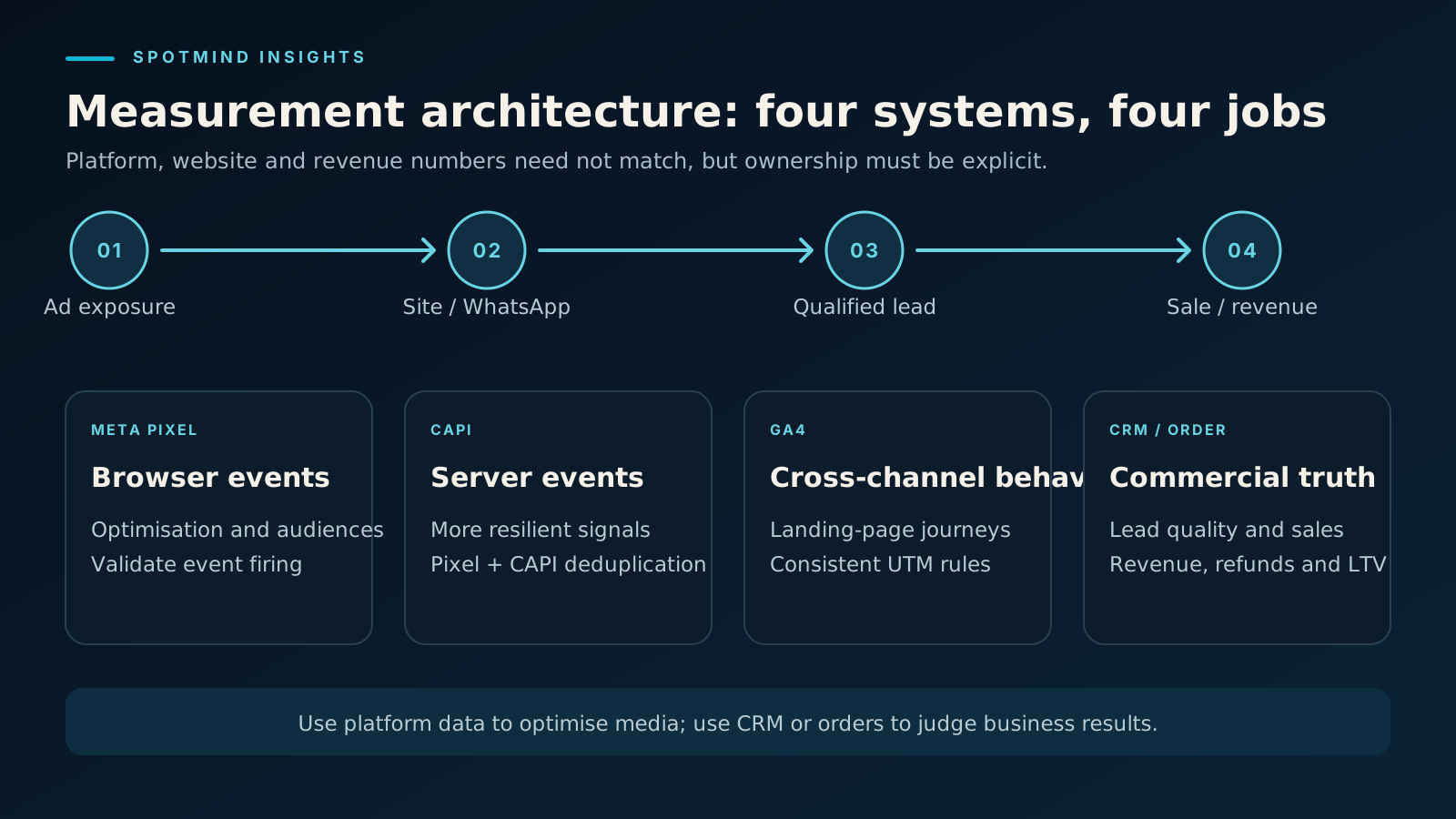
- Meta Pixel: browser-side website behaviour for optimisation and audiences.
- Conversions API: appropriate server-sent events for more resilient signals; when paired with Pixel, follow Meta's event deduplication guidance.
- GA4: cross-channel website behaviour, landing-page quality and paths.
- CRM or order system: qualified leads, actual revenue, refunds, sales cycle and lifetime value.
Ads Manager, GA4 and CRM rarely match perfectly because their identity resolution, attribution windows and scope differ. Do not force them into one number. Decide in advance which system is authoritative for each business question.
Cookie, online-tracking and direct-marketing practices should be transparent, with notices that explain data use and appropriate consent or opt-out handling. Hong Kong PCPD guidance is a useful compliance starting point; this article is not legal advice, and higher-risk uses warrant professional review.
8. Design a WhatsApp conversation, not just a button
A generic pre-filled “I want to know more” message forces the service team to restart discovery. Build the first qualification step into the experience:
- Match the pre-filled message to the promise in the ad.
- Ask only two or three questions that genuinely change the recommendation.
- Set operating hours, a first-response target and a fallback path.
- Tag campaign, creative, lead quality and final outcome.
- Feed invalid-enquiry reasons back to media and content every week.
Cheap conversations are wasted if sales has no service level, script or ownership rule.
9. When to choose Meta or Google Search
Ask whether the market already knows what solution to search for.
- Clear demand and high-intent terms: Google Search can capture existing intent directly.
- New category, visual product or demonstrable story: Meta can help people discover and understand demand.
- Considered purchase: Search captures intent while Meta educates and remarkets.
Compare channels through incremental revenue, margin, customer quality and the full sales cycle—not whichever platform reports the cheaper click. Use consistent UTM rules, CRM source fields and sale definitions.
10. A 30-day launch plan
Days 1–5 | Definition and infrastructure: confirm the commercial goal, allowable CAC or CPL, conversion path, event naming, UTM, Pixel, CAPI and CRM fields.
Days 6–12 | Creative and destination: produce the test matrix and landing page or WhatsApp script. Test every form, link, event and notification.
Days 13–21 | Controlled launch: invest enough to collect useful signal. Avoid large daily changes driven by short-term noise, and log every change.
Days 22–30 | Decide and iterate: reconcile platform, website and CRM results; keep the productive combinations, fix funnel friction and commission the next creative round.
11. Pre-launch checklist
- Does the objective map to the real commercial outcome?
- Does each Ad Set express one audience or placement hypothesis?
- Does the first screen communicate the problem, value and next step?
- Have the mobile landing page, form, checkout and WhatsApp path been tested manually?
- Are duplicate Pixel and CAPI events deduplicated correctly?
- Can UTM, GA4 and CRM follow the journey from click to sale?
- Does service or sales know ownership, response time and outcome tagging?
- Does reporting show media cost, lead quality, closed sales and revenue together?